
BRAIN MAPPING & OPTIMIZATION
The brain is the body’s command center.
It influences attention, mood, emotional regulation, stress resilience, sleep, cognitive performance, and overall well-being.
Yet most people spend far more time evaluating other aspects of their health than understanding how their brain is functioning.
45–60 minutes • In-office
$1200
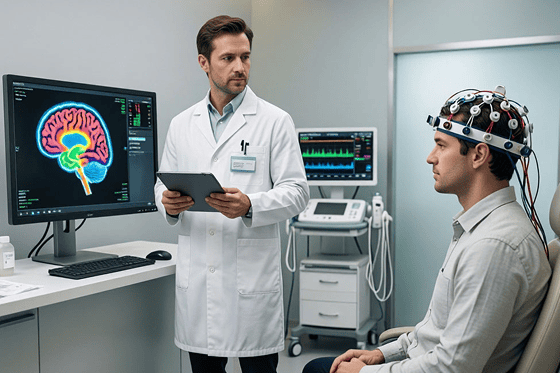
Brain Mapping is a structured assessment designed to provide a more objective understanding of how different regions of the brain communicate, regulate activity, and respond to the demands of everyday life.
The goal is not simply to identify symptoms.
The goal is to better understand the patterns that may be contributing to those symptoms and use that information to guide more personalized interventions.
WHO THIS MAY HELP
Brain Mapping may be helpful if you:
Experience anxiety, stress, or mood changes
Struggle with focus, attention, or mental clarity
Experience sleep difficulties or emotional dysregulation
Want a deeper understanding of your brain function
Are considering neurofeedback or other targeted interventions
Feel that something is "off" but cannot clearly explain why
WHAT IS BRAIN MAPPING?
Brain Mapping uses quantitative EEG (qEEG), a safe and non-invasive method that measures and analyzes brainwave activity.
The goal is not simply to collect data.
The goal is to identify patterns in how the brain processes information, regulates emotions, responds to stress, maintains attention, and adapts to daily challenges.
Think of it as a functional map of brain activity.
Just as an EKG provides information about the heart, Brain Mapping provides information about how the brain is functioning.
This is not a diagnosis by itself.
It is a tool that helps create a clearer picture of brain function and may guide more personalized treatment recommendations.
WHAT'S INCLUDED
Recording of brainwave activity using EEG
Detailed analysis of functional brain patterns
Comparison with normative databases
Identification of areas of dysregulation
Personalized interpretation of findings
Recommendations for next steps when appropriate
How It Works

Schedule your assessment
Brain activity is recorded using a comfortable, non-invasive EEG setup
The data is analyzed and compared to established normative databases
Findings are reviewed and discussed, along with recommendations for next steps
WHAT YOU WILL LEARN
Following the assessment, you may gain:
A clearer understanding of
how your brain is functioning
Insight into patterns related to attention, mood, stress, sleep, and emotional regulation
Greater clarity regarding
strengths and challenges
Guidance regarding
potential treatment options
A foundation for more targeted
interventions when appropriate
FROM BRAIN MAPPING TO BRAIN OPTIMIZATION
Brain Mapping is an important step in understanding how the brain functions, but it is rarely the entire picture.
Like any assessment tool, its value comes from how the information is interpreted and integrated with clinical history, symptoms, lifestyle factors, laboratory findings, and other aspects of health.
For many individuals, Brain Mapping serves as the starting point for a broader Brain Optimization strategy designed to better understand how the brain and body function together.
Neurofeedback training
Functional laboratory testing
Nutritional and metabolic assessment
Medication management when appropriate
Lifestyle and behavioral interventions
Other personalized treatment approaches
The goal is not simply to identify patterns in brain activity.
The goal is to use that information to create a more individualized roadmap for improving brain health, emotional well-being, cognitive performance, resilience, and overall functioning.
Because the map is not the destination.
Understanding is.
FREQUENTLY ASKED QUESTIONS
Do I need to prepare?
No special preparation is required. If possible, avoid caffeine immediately before the session.
Is it safe?
Yes. The procedure is completely non-invasive, painless, and widely used in clinical practice.
Is this performed online?
No. Brain Mapping is performed in the office.
How long does it take?
Approximately 45–60 minutes for recording. Analysis and interpretation are performed afterward.
Will I receive a report?
Yes. Findings are reviewed and explained during a personalized interpretation session, along with recommendations for next steps.
Where should I start?
15 minutes • Complimentary
A focused discussion to understand your concerns, answer questions, and determine appropriate next steps.
Clarity is the first step toward meaningful change.